
Inspections carried out according to requirements
Book your inspection for a new elevator with an accredited partner.
Inspections carried out according to requirements
Book your inspection for a new elevator with an accredited partner.
HomepageServicesInspection & control Lifting Device InspectionInspection of elevators and power-operated
Inspection of elevators and power-operated doors
Inspection of elevators and power-operated doors is an important part of responsible property ownership. Through recurring inspections, you gain a clear overview of the facility’s condition, any deficiencies, and which measures may need to be planned.
For property owners and housing cooperatives, inspections are about complying with applicable legal requirements. DEKRA is accredited by SWEDAC and performs independent inspections of elevators, low-speed elevators, and doors. DEKRA provides an impartial assessment and a clear basis for decision-making based on current regulations.
Our inspection services
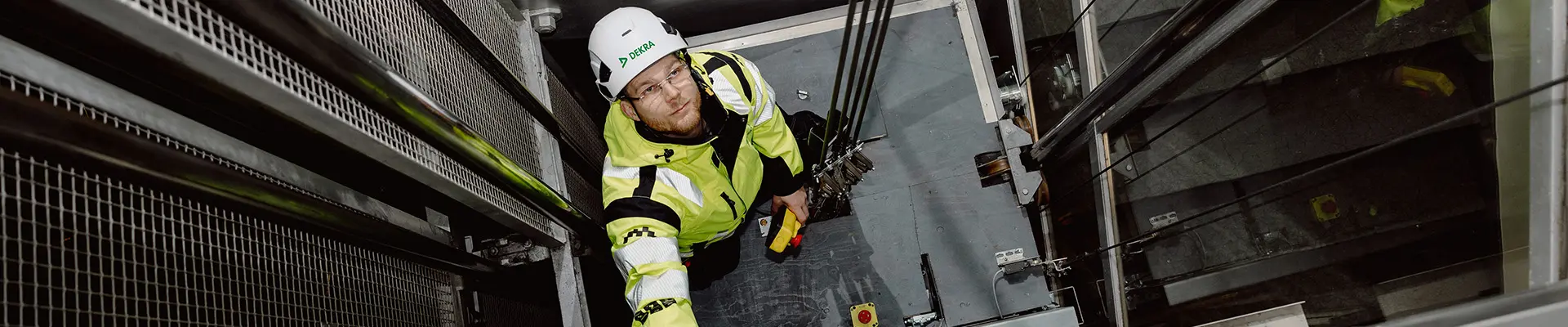
Inspection of elevators
Elevators are a central function in many residential properties, commercial buildings, and public environments. When the facility is used daily, high demands are also placed on functionality and accessibility.
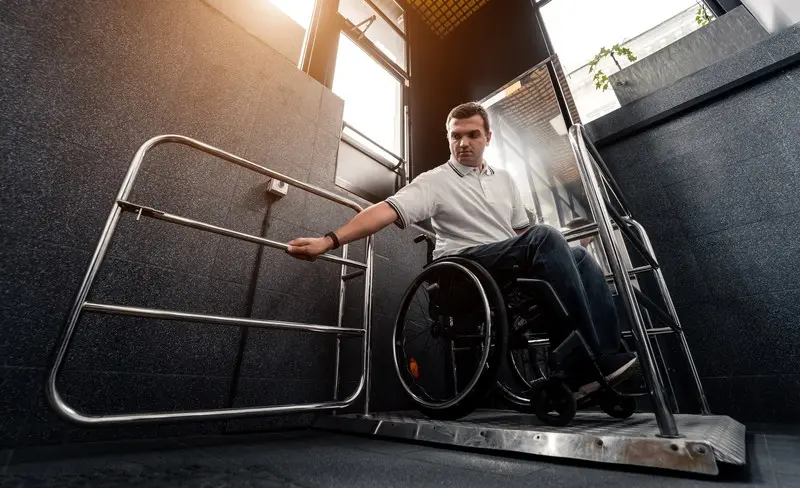
Inspection of low-speed elevators
The term low-speed elevator includes elevators according to the Machinery Directive that have a speed of 0.15 m/s. Platform lifts and stair lifts are used in many different types of properties and operations. Low-speed elevators are used as part of housing adaptations to increase accessibility in homes. Since design, use, and technical solutions may vary, the inspection must be adapted to the specific facility.
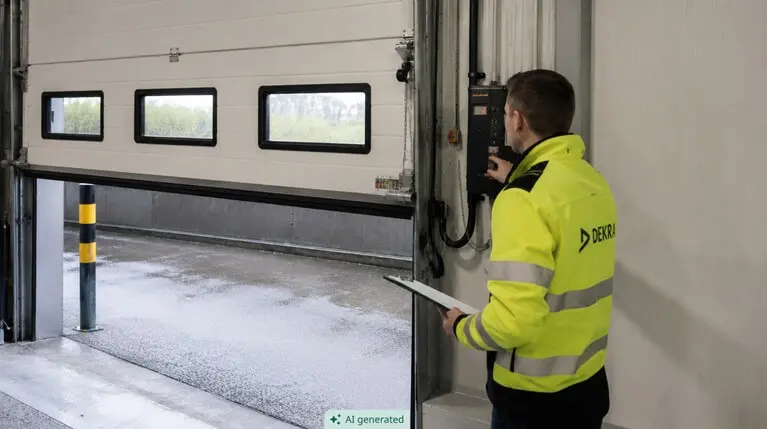
Inspection of power-operated doors
Motorized doors are found in many environments, from apartment buildings and garages to industry, warehouses, and logistics. Doors must therefore be inspected according to intervals specified by the Swedish National Board of Housing, Building and Planning.
Inspection objects
- Passenger elevators
- Goods/passenger elevators
- Platform lifts
- Stair lifts

For these objects, it is common that function and area of use place different demands on the inspection. The inspection is therefore designed based on both technical conditions and how the facility is used in practice.
Responsibility for inspection
Responsibility for ensuring that elevators and doors are managed, maintained, and inspected lies with the facility owner or the party otherwise responsible for the operation and management of the facility.
Support regarding applicable regulations for those responsible for the facility can be found in the PBL knowledge bank.
Regulations and requirements for elevators
When a new elevator is placed on the market, it must comply with the Lift Directive (2014/33/EU). For installers, this means in practice applying relevant standards.
Standards:
- EN 81-20 and EN 81-50.
(These standards will in the future be replaced by the ISO 8100 series.)
When an elevator has been put into use, it is regulated by Swedish legislation and national regulations.
DEKRA is accredited in accordance with ISO 17020, which sets requirements for inspection bodies and how inspections must be carried out.
Periodic inspection of elevators must be performed by an inspection body accredited by SWEDAC.
This creates a clear division of responsibility:
new elevators must meet requirements according to EU regulations, while existing elevators in operation are subject to Swedish rules for use, inspection, and periodic inspection.
Why many choose DEKRA
Choosing an inspection partner is about more than fulfilling a requirement. It is about obtaining an independent assessment, clear documentation, and a basis that can be used in practice.
DEKRA is an established player in inspection and control and works with a wide range of facilities within both property and industry.
With DEKRA you get:
• Accredited and independent inspection.
• Experienced inspection engineers.
• Clear inspection reports.
• Support for planning operation and maintenance.
• A partner with broad technical expertise.
SafeHub – leading customer portal for overview and documentation
With DEKRA’s leading customer portal SafeHub, you get a consolidated overview of your objects, certificates, and documents.
In the portal you can:
- Access all certificates linked to your facilities.
- Monitor the current status of each object.
- Get a quick and clear overview.
SafeHub functions as a digital one-stop shop for inspection-related information. For organizations with many objects or a need for structured information management, it creates a more efficient way of working.
The portal also supports modern workflows where API integrations can contribute to more integrated and automated processes.

Frequently asked questions about elevator and door inspections
Inspection intervals for elevators
Inspection intervals vary depending on the type of object. For elevators, the first periodic inspection takes place after 2 years. Thereafter, goods elevators, small goods elevators, waste transport elevators, stair lifts, and certain platform lifts are inspected every two years, while other elevators are inspected annually. Motorized doors are inspected for the first time after 2 years and thereafter usually every two years. For other motor-driven devices and transport systems, specific intervals apply depending on type and usage.
Handling of identified deficiencies
Deficiencies are documented in the inspection report and form the basis for further measures and follow-up. In the SafeHub customer portal, you as a customer can easily monitor the status of your objects. Your service provider has access to the same information for the objects they are responsible for.
Contact us or request a quote
You are welcome to contact DEKRA for more information about inspection of elevators and power-operated doors. We will help you find the right setup based on your facility and your needs.
Contact form for comments and complaints
We want to do our best to ensure that you receive good treatment and of course all our decisions must be impartial and correct. If you have suggestions for improvement or views on our operations, we will gratefully receive them.
If you are dissatisfied with something, you can file a complaint or appeal a certification decision. Complaints about DEKRA Industrial's handling of certification tasks for personal certification of Welders should be made to the Technical Manager Welding or Quality Manager DEKRA, Solna, Hemvärnsgatan 11B, 171 26 Solna, exchange 010-455 10 00. You can also use the form at the bottom of this page.
Receipt of the complaint or appeal must be confirmed by DEKRA to the complainant within 10 working days. Assessment and investigation of the complaint will be carried out by personnel independent of the assignment, normally the Welding Technical Manager and the Quality Manager. The results of the analysis and investigation as well as the decision on measures are communicated to the complainant for the opportunity to comment as soon as possible.
The button below takes you to the form for submitting suggestions for improvement, comments or complaints.
Lagergatan 5
415 11 Göteborg