Black and white façade of a modern office building in Germany.
Protecting long-term value
HomepageIndustriesConstruction and Real Estate

Construction and real estate

Safety, compliance, and long-term asset value

The construction and real estate sector is capital-intensive, highly regulated, and exposed to a wide range of risks. Structural safety, regulatory compliance, sustainability, and long-term asset value are key considerations throughout the asset lifecycle – from planning and development to construction, operation, and management.

DEKRA supports property developers, investors, construction companies, property owners, and operators with independent Testing, Inspection and Certification (TIC) services. Across the entire asset lifecycle, we help our customers reduce risk, increase transparency, and protect their investments.
How DEKRA supports construction and real estate
Expertise across the asset lifecycle

We provide support from early planning and construction through operation, maintenance, and modernization.

Independent assurance and compliance

Independent inspections, assessments, and certifications help ensure that projects and properties meet regulatory and contractual requirements.

More efficient operations

DEKRA helps organizations improve productivity through workforce development, safer workplaces, and more efficient processes.

Sustainability and ESG

We support sustainability initiatives through energy audits, environmental assessments, and independent ESG verification services.

Our approach

A risk-based, lifecycle approach to safe and sustainable assets

Construction and real estate projects require structured oversight throughout the entire asset lifecycle – from planning and design to construction, operation, modernization, and decommissioning.
DEKRA applies a risk-based approach that integrates regulatory compliance, sustainability, and long-term operational resilience into each phase of a project. Environmental, health, and safety requirements are becoming increasingly stringent, while property owners and developers must also ensure that their investments retain their value over time.
We provide independent assessments and recognized certifications covering areas such as quality management, cybersecurity, and personnel competence. Combined with mandatory health, safety, and environmental (HSE) requirements, these services provide a structured foundation for safe and sustainable projects.
Independent verification can also support circular construction practices and sustainable building strategies while identifying risks at an early stage and strengthening long-term asset value and project profitability.

Building competence in a sector facing a skills shortage

The construction sector continues to face a shortage of qualified workers. DEKRA supports companies with independent competence assessments, professional training, and certification programs for both permanent and temporary personnel.
By aligning workforce development with recognized safety, environmental, and sustainability requirements, organizations can reduce project complexity, improve workplace safety, and build long-term capabilities within their own operations.
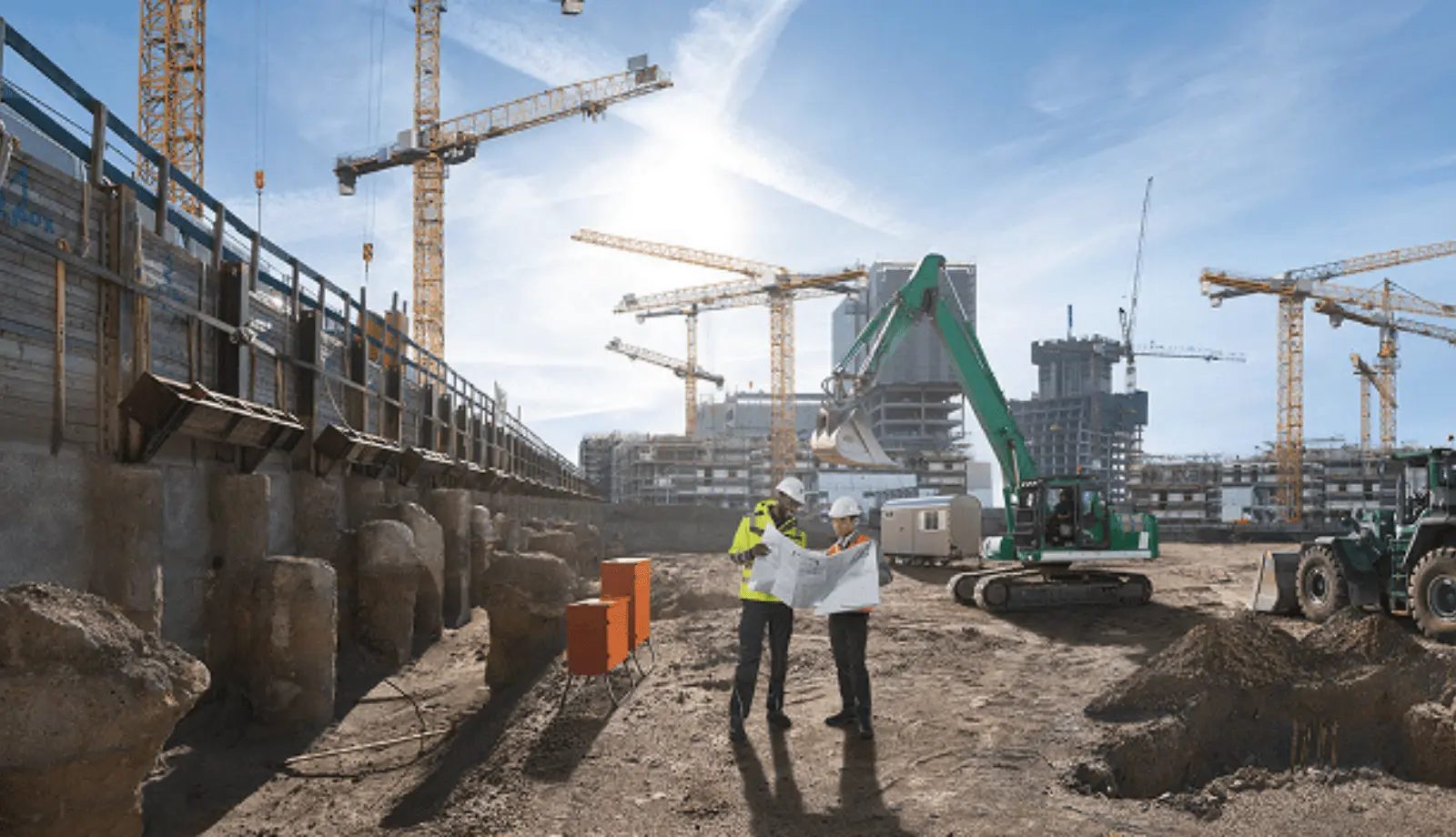
Two men at a construction site are looking at a blueprint together.
Our services
Independent expertise across the project lifecycle using proven methodologies and technical expertise, DEKRA develops solutions tailored to the specific requirements of each construction and real estate project. From early planning and technical due diligence to construction oversight, operation, maintenance, and decommissioning, we help our customers identify risks, ensure compliance, and create long-term value.

FAQ

Why is independent technical due diligence important in real estate transactions?

Independent technical due diligence identifies structural deficiencies, environmental risks, and compliance gaps before acquisition or financing decisions are finalized. This helps protect invested capital and reduce future liability.
A technical due diligence assessment can cover the building structure and structural systems, building envelope, fire protection, mechanical, electrical, and plumbing (MEP) systems, environmental risks, and the property's regulatory compliance status.
In acquisition or refinancing situations, undisclosed deficiencies can affect both asset value and future operations. An independent assessment identifies potential capital expenditure requirements, deferred maintenance, safety deficiencies, and regulatory non-conformities before contractual commitments are finalized.
This provides a stronger basis for decision-making, strengthens the negotiation position, and supports a more accurate assessment of property-related risks and value.

How does DEKRA support ESG in real estate portfolios?

Environmental and ESG performance is becoming increasingly important for property valuation, financing conditions, and tenant demand.
DEKRA provides TIC services that can be used to verify areas such as energy efficiency, emissions performance, environmental compliance, and sustainability governance.
Independent ESG verification reduces the risk of greenwashing and strengthens the credibility of sustainability reporting. For institutional investors, independently verified environmental data can also support greater transparency and provide a stronger basis for assessing alignment with EU Taxonomy requirements.

How do lifecycle inspections protect long-term asset value?

Risks do not disappear when a construction project is completed. Buildings and technical systems age, regulations change, and operational requirements evolve over time.
A lifecycle-based inspection approach therefore integrates regular safety assessments, technical reviews, and performance assessments into long-term asset management.
This supports preventive and condition-based maintenance, reduces the risk of unplanned downtime, and helps identify compliance gaps at an early stage. In this way, lifecycle inspections support both long-term value retention and resilient, efficient property management.

How does independent construction oversight reduce project risk?

During construction, deviations from the design, quality deficiencies, and workplace safety issues can result in costly rework, delays, or regulatory problems.
Independent site inspections verify that work is carried out in accordance with technical specifications, safety requirements, and applicable building regulations.
Objective oversight can reduce the risk of contractor disputes, improve documentation, and support an efficient project handover. For developers and project owners, this can contribute to shorter lead times, better cost control, and reduced legal exposure.

What is the strategic role of testing, inspection and certification (TIC) in construction and real estate?

Testing, Inspection and Certification (TIC) provides an independent mechanism for risk management and value protection across the construction and real estate sector.
Construction and real estate projects typically involve long asset lifecycles, multiple stakeholders, and significant capital investment. Independent TIC services provide objective verification of areas such as structural integrity, regulatory compliance, occupational safety, fire protection, and environmental requirements.
For investors, property developers, owners, and operators, TIC is therefore about more than meeting formal requirements. Independent assessments can provide stronger decision-making support for investment and financing, reduce liability exposure, and strengthen long-term asset performance. Independent third-party verification also increases transparency between contractual parties and can help prevent disputes and conflicts.
Share page :